Jump to:
A garden fountain is a decorative water feature that recirculates water to add soothing sounds and a focal point to a yard, patio, or landscape. A reservoir holds the water, and a submersible pump pushes it up through the fountain so it flows back down and repeats the cycle. It’s one of the simplest ways to bring the look and sound of moving water into a backyard.
What to Know About Garden Fountains
- A garden fountain recirculates the same water from a reservoir, so it doesn’t need a constant connection to a water line.
- A submersible pump powers the flow, pushing water through tubing to the top of the fountain and back down into the basin.
- Popular styles include tiered, wall, freestanding, tabletop, stone, stacked slate, bird bath, and water and fire fountains.
- A garden fountain adds relaxing sound, helps mask nearby noise, and gives birds and other wildlife a place to drink.
Garden fountains suit homeowners who want something more dramatic than a flower bed but simpler than a full pond. Below, we cover what a garden fountain is, how it works, the styles to consider, and what it can add to your outdoor space.
What Is a Garden Fountain?
A garden fountain is an architectural or decorative water structure placed in a yard, patio, or landscape that recirculates water to create sound and a visual focal point. Unlike a waterfall, it usually sends water upward or outward from a central point and lets it fall back into a basin.
Garden fountains can be designed around the taste and style of your property, and they tend to stand taller and more statuesque than most other landscape details. That’s why they work so well as a centerpiece.
Our team at NVS Waterscapes installs backyard fountains for homeowners across the Capital Region, and a garden fountain is one of several kinds of water features that can suit a property.
How Do Garden Fountains Work?
A garden fountain works by moving the same water through a continuous loop: a pump lifts it from the reservoir, it spouts out the top, and it falls back down to be pumped again. Because most garden fountains recirculate, they avoid a constant water line connection, which also helps keep operating costs down.
The system comes down to these parts:
- Reservoir: This holds the water the fountain uses, so the feature always has plenty to recirculate.
- Submersible pump: The pump sits in the water and pushes it up through the fountain and back down into the basin.
- Tubing: Tubing acts as the delivery system, carrying water from the pump to the top of the fountain.
- Power supply: The pump will most likely need to be plugged in, which can influence where the fountain is placed.
For a closer look at the mechanics, see our related article, How Do Outdoor Fountains Work?
Common Styles of Garden Fountains
Garden fountains come in several styles, and the right one depends on the space you have and the look you want. Each style changes how the water moves, how much room the fountain takes up, and the mood it sets. Many homeowners start by comparing different styles of fountains for the backyard before settling on a design.
1. Water and Fire Fountains
Water and fire fountains combine moving water with flame for a dramatic evening centerpiece. Fire can be built into urn, stacked slate, or spillway designs, and our fire and water feature installation page explains more.
2. Wall Fountains
Wall fountains are flat-backed units that attach to a wall, fence, or courtyard partition, which saves floor space. They suit tighter yards and are a popular choice among patio fountain ideas.
3. Tabletop Fountains
Tabletop fountains are compact, small-scale versions meant for outdoor tables or small balconies. They’re a good fit for tight spaces where a larger fountain wouldn’t work, though they have a more modest presence than a landscape centerpiece.
4. Tiered and Spillway Bowl Fountains

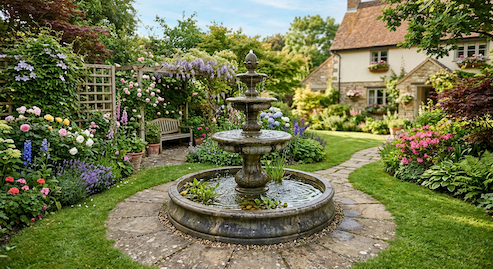
Tiered fountains are the classic multi-level design, with two, three, or four tiers where water spills from upper bowls into a larger base basin. Spillway bowl and basin fountains follow the same idea, adding visual interest and enriching the sound of the water, and they pair well with Japanese garden elements like bamboo.
5. Freestanding and Urn Fountains

Freestanding fountains are standalone art pieces, pillars, or urns placed directly in a garden bed or on a patio. They come in many sizes and finishes, from short to tall, and grouping different sizes together adds levels and visual interest.
6. Stone and Stacked Slate Fountains
Stone fountains bring a natural look to the landscape, often with a cascading effect over the rock. Stacked slate fountains offer a more modern take on rock features and create a dynamic cascade while requiring minimal upkeep.
7. Bird Bath Fountains
Bird bath fountains use a pump to circulate water into a flowing design, which makes them a friendly choice for wildlife. They go well beyond a simple basin and come in a wide range of looks.
Benefits of a Garden Fountain
A garden fountain brings a handful of everyday benefits to a backyard, from calmer surroundings to a more lively landscape. The advantages show up in how the space sounds, looks, and feels once the water is running.
Relaxation and Noise Masking
The sound of running water is naturally soothing, and it helps cover neighbors, music, and light traffic. For homes near a busy road, a fountain is one of several ways to reduce road noise in a backyard.
A Focal Point for the Yard
A garden fountain gives the eye somewhere to land. Placed at the end of a path, in the middle of a patio, or inside a planting bed, it anchors the design around it, and thinking through where to put a water feature in a yard helps you get the most from that view.
Wildlife Attraction
A fountain gives birds and other animals, such as deer, a place to stop for water. With a few design choices, you can even design a water feature for birds specifically.
Caring for a Garden Fountain Through Upstate NY Seasons
A garden fountain needs only light, regular care. During the warm months, checking the water level and clearing debris about once a week keeps the pump running well, and the routine is simple once you know what’s involved in water fountain maintenance.
If you’re wondering what to do with water features in winter like a fountain, there are a few steps needed to winterize it. Before freezing temperatures arrive, the pump should be removed and stored in clean water where it won’t freeze, and the fountain should be drained, cleaned, and covered.
Bringing a Garden Fountain to Your Capital Region Yard
A garden fountain is a straightforward way to add sound, movement, and a focal point to a backyard, and it fits a wide range of yard sizes and styles. Our team at NVS Waterscapes designs and installs backyard fountains for homeowners in Albany, Saratoga, Schenectady, and throughout the Capital Region.
If you’d like to talk through ideas for your property, contact our team to schedule a consultation, or use our Project Planner to get a faster estimate.
FAQs About Garden Fountains
Garden fountains are recirculating water features that combine a reservoir, a pump, and a decorative structure to create moving water in a yard. Homeowners often ask how they work, what they add to a property, and how they differ from other water features. These answers cover the questions we hear most.
How does a garden fountain work?
A garden fountain works by recirculating water from a reservoir through a submersible pump. The pump pushes water through tubing to the top of the fountain, and it flows back down into the basin to repeat the cycle. This means the fountain doesn’t need a constant water line connection.
Are garden fountains worth it?
Garden fountains are worth it for many homeowners because they add relaxing sound, a visual focal point, and a water stop for birds and other wildlife. They can also help mask nearby noise, and many homeowners wonder whether water features add value to a home as well.
What’s the difference between a waterfall and a fountain?
The difference between a waterfall installation and a fountain is mainly in how the water moves and how the feature is built. A garden fountain is a structure that sends water upward or outward from a central point and lets it fall back into a basin, while a waterfall sends water flowing down over rocks or a ledge in a more natural style. If the natural look appeals to you, a waterfall may be the way to go.
How do I make a fountain in my garden?
To make a fountain in your garden, you need a reservoir to hold the water, a submersible pump, tubing to carry water to the top, and a nearby power source for the pump. Getting these pieces right is harder than it looks, since wrong measurements, the wrong pump size, electrical problems, and unfamiliar permitting rules are common DIY pitfalls. Those are the downsides of DIY outdoor water features, and installation is usually best left to professionals like our team.